Despite a few missteps, it’s a fun and inventive adventure
If you had asked me, “is there room in the concept of firefighters to make a superhero battle anime about monster hunting, compassion, and political intrigue?” I would have had my doubts, but Fire Force proves there’s plenty. Although the depth of the premise is ambitious, the anime mostly pulls it off.
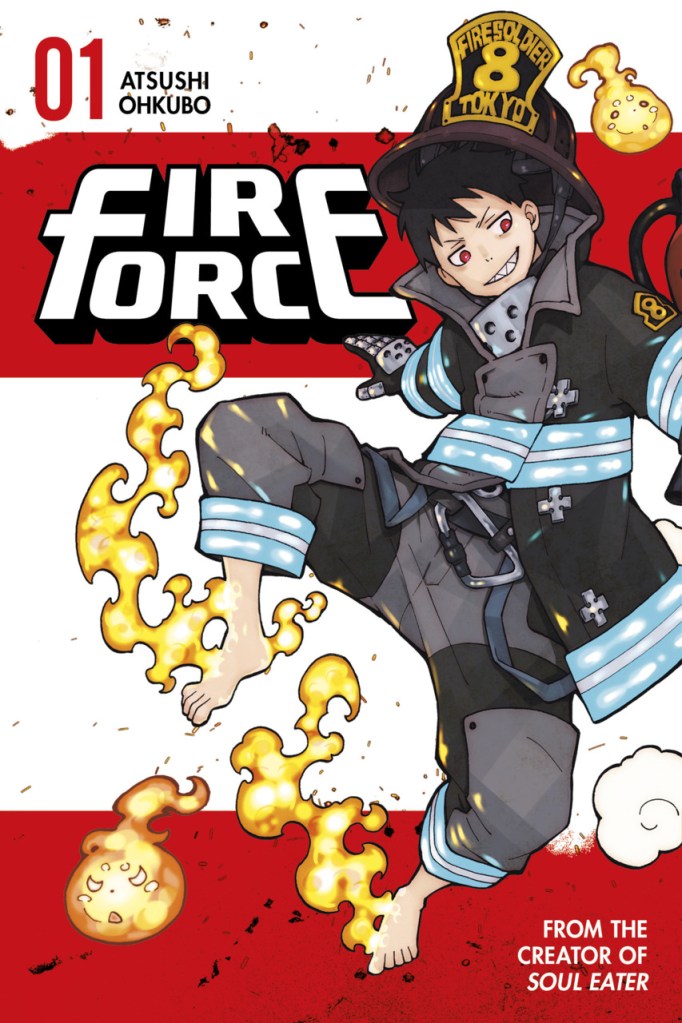
By combining concepts not normally seen together, Fire Force makes something creatively fun and fresh—that’s what I love best about it! This is firefighting meets Ghostbusters and My Hero Academia, with first responders using gadgets, brawn, and pyrokinesis to battle fiery undead. There are a large number of complex elements in the story itself, but when taken together, everything works.
The Case Of The Very-Nearly Perfect
When I saw an ad for Fire Force, it looked like just an action anime centered on the dangerous lives of first responders. Was it probably gripping? Certainly, but I prefer inventive fantasy, not grounded realism, so I wrote it off.
Watching the first episode proved me very wrong; this anime is anything but mundane. Like Blue Exorcist or Log Horizon, it’s one of those rare shows that’s full of magic and heart and seemingly makes every right choice; a gem that pulls viewers into a mesmerizing world and interesting story. I was blown away by so much in Fire Force’s first few episodes, but unfortunately the spell was broken a bit around episode four.
What went wrong, what went right, and what do I wish the show had done?
What It Did Right: An Inventive Power System
I admire systems in stories and games that enable a wide range of superpowers. JRPGs provide different power sources for characters to tap into—genre staples like holy magic, heavy swords, and elemental energy. Comic book heroes draw their strengths from training, technology, and mutation. By including variety in character concepts, audiences can experience lots of interesting superheroics. More is better than less, right? Well…
In Fire Force, the only superpower is pyrokinesis—the ability to create or control fire. Despite focusing on only one element, the show crafts a deep and satisfying power system. With a creative perspective, we can see just how broad the scope of pyrokinesis actually is.
In Company 8, our protagonist Shinra Kusakabe shoots flames from the soles of his bare feet, granting him flight, flaming capoeira, and rocket bursts of superspeed. Arthur Boyle, Shinra’s rival, superheats fire into a blade of white-hot plasma. Takehisa Hinawa, a sharpshooter, manipulates the explosion of gunpowder to increase the speed of fired bullets. The witchlike Maki Oze animates flame into fireball familiars. Tamaki Kotatsu, an agile brawler, manifests fiery claws and two blazing tails, evoking the nekomata, Japan’s twin-tailed cat yokai. One of the team’s villains is even able to stop time temporarily by absorbing heat from the universe itself.
Pyrokinesis is specific but not limiting; fire is heat, energy, motion. If for nothing else, watch this anime for its physics-based weirdness.
What It Did Right: A Compelling Mystery
In the world of Fire Force, an affliction that turns people into monsters emerges seemingly out of nowhere. Exactly why this phenomenon occurs isn’t understood at all—nor are the blazing undead creatures it creates. Instead, it’s just grimly accepted that anyone can transform into an “Infernal” at any time through the explosive process of “Spontaneous Human Combustion.”
Fire Force was smart to center around a mystery; human beings don’t handle ambiguity well. The success of our species depended upon pattern recognition and accurate threat assessment, so our brains were wired to tease out answers and speculate on connections. When there’s an unanswered question, especially one that seems to defy explanation, an itchy desire to know bubbles up.
I can’t think of a mystery more pressing than one that threatens the entire human race, not just with destruction, but the loss of autonomy and identity. Even in The Walking Dead, characters know they won’t lose themselves to zombification unless very specific things happen. Spontaneous Human Combustion affords no such comfort—seemingly anyone can combust for no apparent reason.
Spontaneous Human Combustion and the Infernals it creates give our heroes at Company 8 a reason for their heroics. Until the process is understood, everything is at stake; until the Infernals are put to rest, people and families are suffering. Series writer Atsushi Oukubo was wise to include these elements in his story: they’re compelling, they drive its action, and they provide antagonists whenever needed.
What It Did Right: A Dignified Culture
Something that’s notable about Fire Force is its approach to the “monster slayer” genre. Monsters in these stories traditionally have an anonymity; we understand them as inhuman and don’t give them further thought. The Walking Dead doesn’t linger on who its zombies once were. Attack on Titan depicts its Titans as frenzied sharks. DanMachi’s baddies exist to convey EXP and drop loot. Fire Force takes a different approach—recognizing that its monsters were once people.
Like Demon Slayer’s Tanjiro Kamado, the world of Fire Force treats its monsters with compassion. They do not see abominations, only once-beloved family and friends. Our heroes accept a moral duty to put the dead to rest—existence as an Infernal is seen as a form of great suffering. Church-appointed clergy operate within each firefighting company, solemnly administering a last rites-style prayer before every killing shot. Fire Force grants a moving dignity to its burning dead.
What It Did Wrong: The Wrong Antagonists
What’s not to like in Fire Force’s premise? It showcases creative superpowers. It’s built around a wild mystery. It depicts a beautiful culture. Sounds pretty solid, right?
The problem for me isn’t any of those things: it’s that the anime focuses on the wrong antagonists.
In Fire Force’s post-apocalypse, there are eight fire companies protecting the stabilized nation of Tokyo. Each is charged with two responsibilities: solving the mystery of Spontaneous Human Combustion and defeating Infernals. In addition to Companies 1-8, Tokyo is home to an empire, church, and megacorporation, all of them dangerous. So far, so good—in any state, there will always be powerful organizations with their own agendas. That’s believable.
Is there solidarity between these parties, though? Is humanity at least united against the scientifically-accepted supernatural threats facing them? No, and that’s where the show irks me. It’s revealed early on that every major organization in the nation is actively researching the world’s afflictions, but none of these parties are sharing their information with one another because it’s… profitable.
I mean, hey, I get it—information is power. Fire Force is correct in recognizing this. In a world literally punished by flaming horrors for what it does not know, information is even more powerful. It’s a valuable currency, and Fire Force’s world disappointingly chooses profit over progress.
Capitalism-bashing aside, that’s not what really frustrates me about this show. It’s that we get this creative, lovely, inventive engine for a show, and then the anime veers off into the wrong direction. What’s more interesting—a thrilling show about firefighters battling flame monsters of all different shapes, sizes, and natures, or a plodding… moody… cold war grapple-fest between regulatory agencies?
I love the show, I do, but the setup was right there! I wish Fire Force committed fully to the monster-slaying aspect of its premise and dropped the cloak-and-dagger angle it leans on so heavily. I don’t want politics and espionage; I want monsters. Give them to me! They’re the most interesting part of this show and they could have been made even more interesting and compelling with the proper approach.
This show could have so easily been a monster of the week-style anime without losing its post-apocalyptic science-fiction paranormal mystery angle and it would have been better for it. Fire Force still could have been deep, included satisfying arcs, and developed antagonists outside of its monsters. It didn’t need any of its subterfuge. Though it’s still thrilling and fun, the conflict of Fire Force is muddled by too many warring parties.
What It Did Wrong: Things Are Unclear
I feel less passionately about this next sin, but it does impact the anime’s quality—things are unclear and we get information at a slow rate. Fire Force is a complex high-concept world with a lot of layers, complicated history, and dozens of parties at play; it needs context. I want to buy into the show’s premise, but it’s hard without a broader understanding of what’s going on.
As I understand it, the world of Fire Force takes place in a fictional future version of ours, two or so centuries from the present day. Mysterious fires emerged from seemingly nowhere, razing the earth, crumbling nations, and nearly destroying humanity. During this calamity, a man named Raffles I journeyed the world on a pilgrimage with his disciples and eventually found an “unsullied” flame. Using this, he was able build a limitless power source and stabilize the newly formed nation of Tokyo.
Does this make sense? Yeah, no, not really… That’s because in Fire Force, it’s hard to tell whether the information is legitimate exposition or just mythology and propaganda.
Also, although it deals with the supernatural, Fire Force’s explanation of its metaphysics is notably vague. There are clearly rules behind how things function but we’re not told exactly what they are. The show makes heavy use of jargon that isn’t properly explained or elaborated on. It’s tiresome and confusing. Be prepared to hear about “Adolla” and “Adolla Bursts” over and over again. (And no, I still don’t fully know what the heck that is.)
While Fire Force’s story is consistent, its characters are three-dimensional, and its plot generally makes sense, we’re left in the dark about quite a lot. Preserving mystery and tension at the cost of context doesn’t help the show; it actively hurts it.
What It Did Wrong: Two Odds and Ends
Is there any worse crime for a show than to introduce something interesting, only to drop it like a hot potato? Well, Fire Force’s episode five features a Spontaneous Human Combustion that results in a never-before-seen sentient Infernal. Sounds groundbreaking, right? Sounds like maybe that kind of thing would be important to understanding the problems facing that world, right? It is, and it’s captured, studied, and eventually killed.
What.
In addition to that, not much attention is paid to just how horrific living in that world would be. People are remarkably chill about the very real chance that they and everyone they love might spontaneously erupt into flames and arise a monstrosity. While there would certainly be hope, I have to think that there’d be a far greater proportion of sheer, unrelenting terror. I just don’t think a society would be able to survive with that kind of unanswered problem for very long, let alone two centuries.
What I Wish It Did: Change Its Focus
Something in one of Fire Force’s early episodes truly excited me: Maki Oze’s firefighting helmet. Tapering to a point that hung in a loose curl, it resembled a classic spellcaster’s hat. Seeing it for the first time, I realized what the anime could have been—a modern supernatural adventure with JRPG flavoring. I’m talking firefighting meets Ghostbusters meets Final Fantasy; a high-octane disaster drama set in a world mostly like ours but laced with glowing veins of sword and sorcery goodness.
Think about it:
- Maki summons familiars and wears a cap. Wizard.
- Arthur wields a sword and is quick on his feet. Fighter.
- Akitaru stands fast behind heavy shield and visored helmet. Paladin.
- Iris serves the Holy Sol Temple with strong faith. Cleric.
- Takehisa takes aim at long range. Archer.
- Shinra fights with empty hands, bare feet, and passion. Monk.
- Tamaki transforms into a feral beast. Druid.
Instead of centering the world around fire, I would have turned the story into a magical war of the four elements. Infernals would be a strange over-manifestation of Fire, while Earth, Wind, and Water would move through humanity in an effort to counter it and restore balance.
Fire Force Companies 1-8 would be a united front, acting as an elemental Green Lantern Corps. The Holy Sol Temple would worship Water instead of the sun, setting the church in even more direct conflict with Spontaneous Human Combustion and Infernals.
Characters would tap into new veins of power with the same cleverness as Atsushi Okubo’s original design. Akitaru would channel the durability of mountains to weather titanic damage. Arthur would race with the speed a hurricane. Iris would use bodies of water to heal and defend.
There’s so much potential here!
Final Thoughts
Fire Force is a thrilling, creative show with incredible heart. With a fascinating premise, finely-detailed world, and compelling supernatural mystery, this adventure has a lot to offer. Though it stumbles in its execution and is at times more interesting than entertaining, Fire Force is still a fine action adventure if you’re looking for one, even if it totally should have been more sword and shield and less cloak and dagger.
 The Sphinx's Mirror